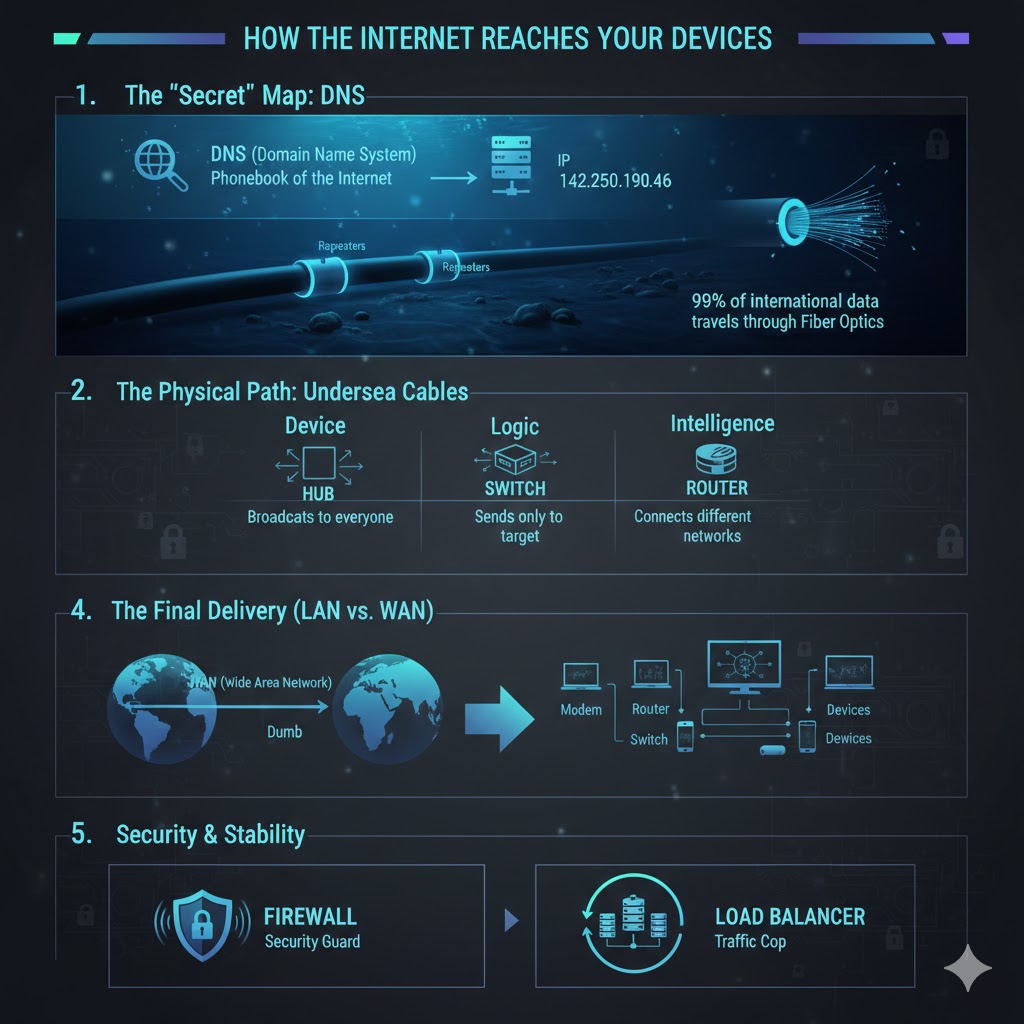
Understanding Network Devices
Introduction
We all use the internet. Some people’s work depends entirely on it, while others use it for studies, entertainment, money transfers, and other purposes. Everyone uses it according to their needs.
But have you ever thought how internet work and how it reaches us?
Internet
In simple words, it connects us together. For example, just like we talk on WhatsApp or X (Twitter) or any platform, two or more computers or devices can connect with the help of the internet.
- “Internet invent in 1970”.
So the question is “How does the internet reach our devices?”
Let’s understand this using previous message example
you message your friend on what’s app
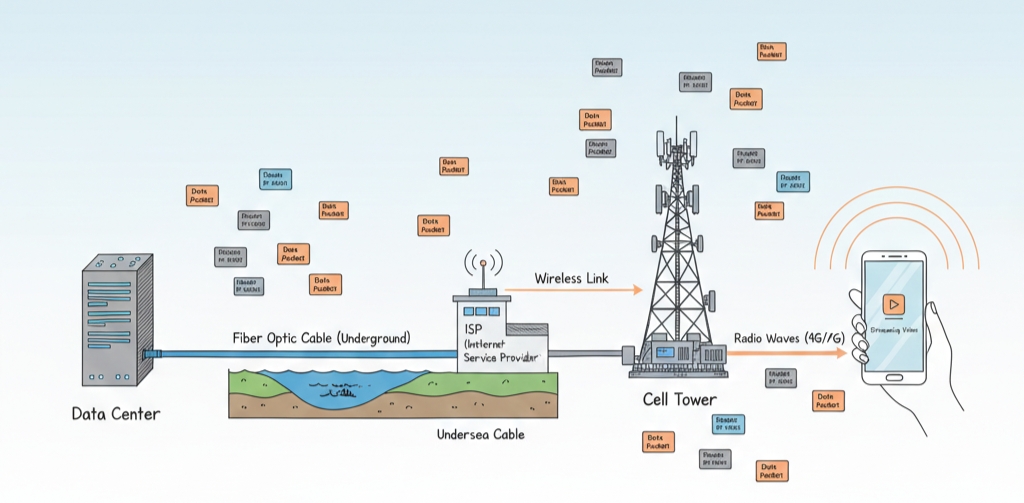
then your phone sends a “package” of data (your message) thought the air (data) to a nearby cell tower or router.
that message travel through giant underground ,under-ocean cable at lightning speed (message run like the dc superhero flash)
and then it reaches the server which owned by what’s app just like digital post office.
the server looks at who the message is for and sends it back out through the cable to your friend device.
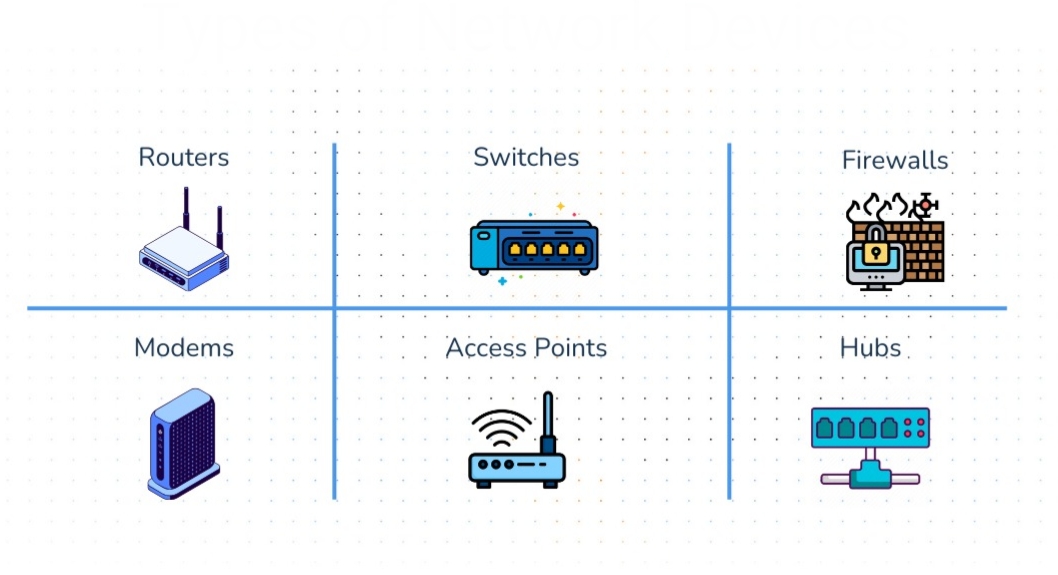
Devices that make internet Work
“If the internet is highway then network devices are traffic light and post office.”
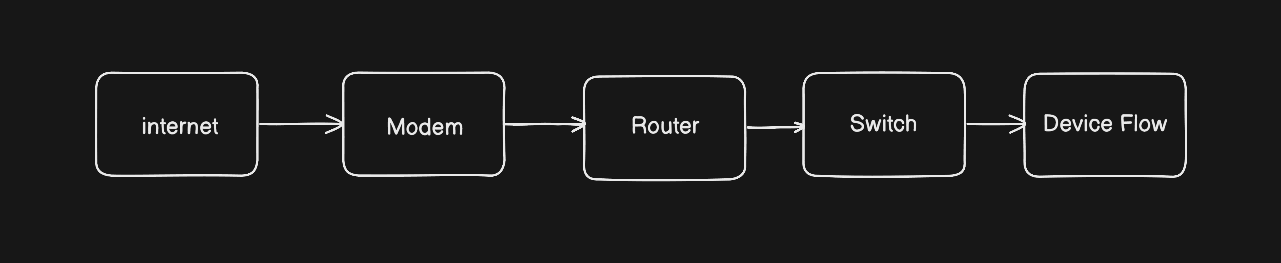
Internet to Devices:
The flow is like Internet → Modem → Router → Switch → Devices flow
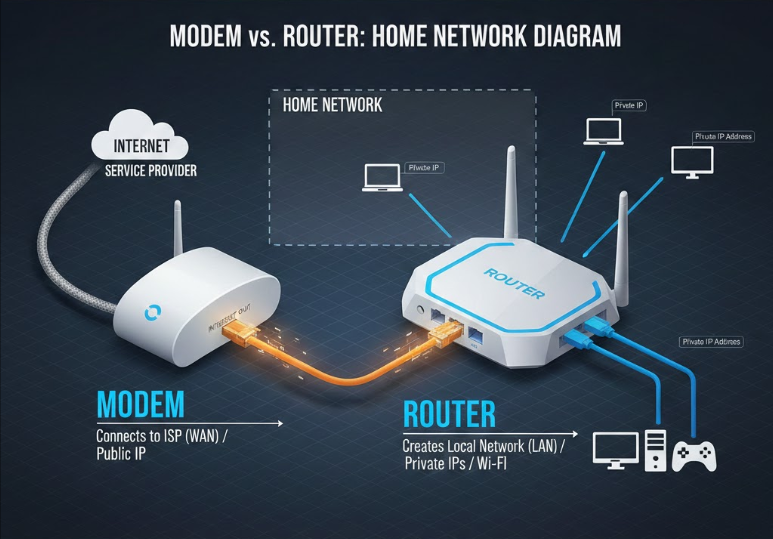
Modem:
Modem is the part in this chain which connects users to the internet.
modem converts digital signals into analog signals and vice-versa.
Here's why: your computer only speaks in digital or bits (binary code 0s and 1s), while the internet (line cables) communicates in analog (waves of electricity).
the modem name com from Modulate (sending data) and Demodulate (receiving data).
Modem is like bridge, without bridge you cant’s cross the river and go home (home refer as internet).
Router:
It is center hub of your network.
It allows multiple devices to share the same internet connection.
It’s simply connects multiple networks.
And also gives as IP addresses.
Modem VS Router
| Feature | Modem | Router |
| Primary Goal | Connects your home to the ISP. | Connects your devices to each other and the modem. |
| Connection Type | WAN (Wide Area Network). | LAN (Local Area Network). |
| IP Addresses | Provides one Public IP. | Assigns multiple Private IPs. |
| Ports | Usually 1 Ethernet + 1 Service port. | Multiple Ethernet + Wi-Fi antennas. |
Switch / Hub
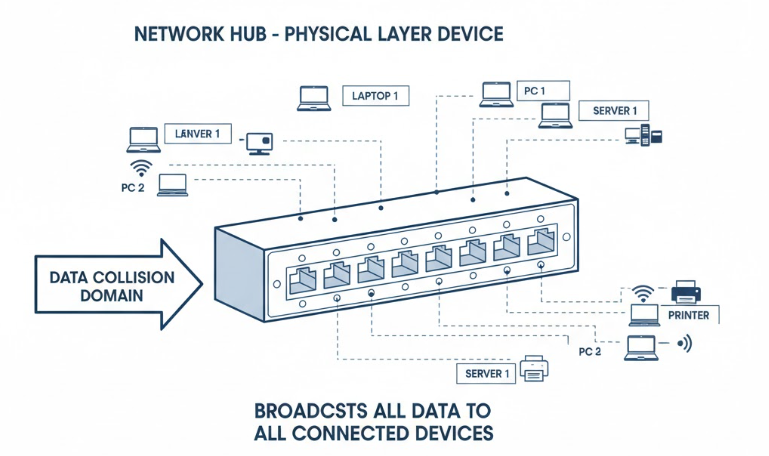
Hub:
A hub is used to connect multiple devices together in a Local Area Network (LAN).
It stays in Physical Layer (Layer 1) of the OSI model.
Hub is “non-intelligent” device, when it receives a data from one devise it does not check but also sends to all devices .
The “Broadcast feature” of a hub is limiting and low security.
Switch:
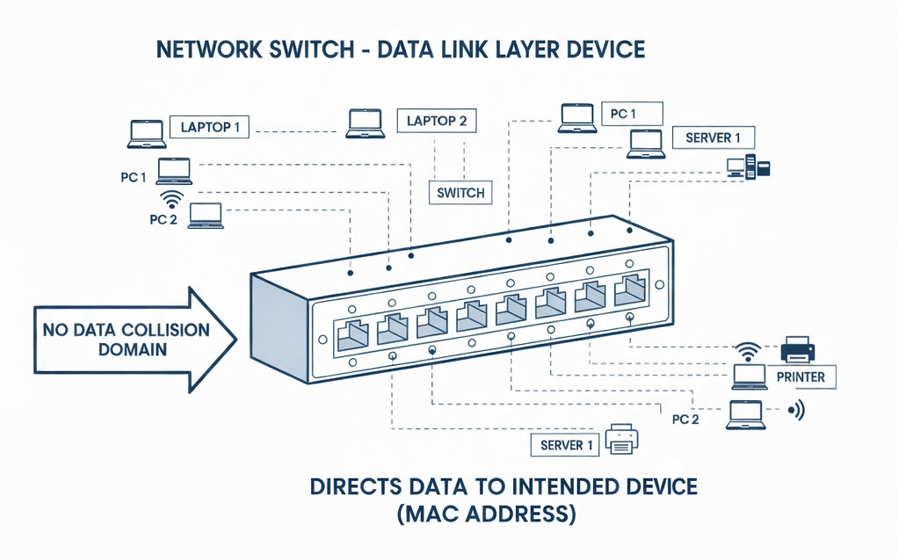
Switch is connect multiple devices within a single Local Area Network (LAN).
It stays in the Data Link Layer (Layer 2) of the OSI model.
A switch is smart; it knows which device to send data to.
Difference between Switch and Hub:
| Feature | Hub | Switch |
| OSI Layer | Physical Layer (Layer 1) | Data Link Layer (Layer 2) |
| Intelligence | Unintelligent (passive/active repeater) | Intelligent (learns MAC addresses) |
| Data Delivery | Broadcasts to everyone | Unicasts to specific devices |
| Bandwidth | Shared among all ports | Dedicated to each port |
| Collision Domain | One shared collision domain | Separate collision domain per port |
| Security | Low (any device can see all traffic) | Higher (traffic is isolated) |
| Traffic Efficiency | Low (high congestion) | High (low congestion) |
Firewall:
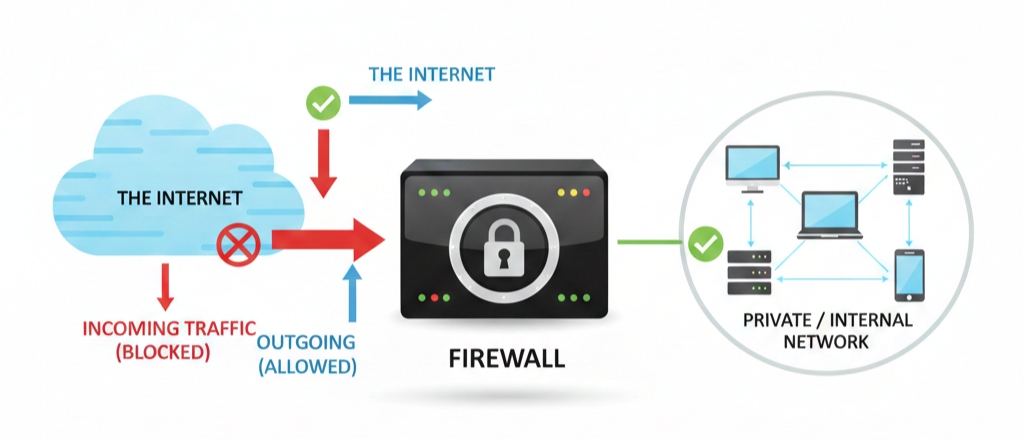
Firewall is basically a security guard.
Who controls incoming and outgoing traffic based on security rule.
It’s job is to allow safe traffic in and keep dangerous traffic out.
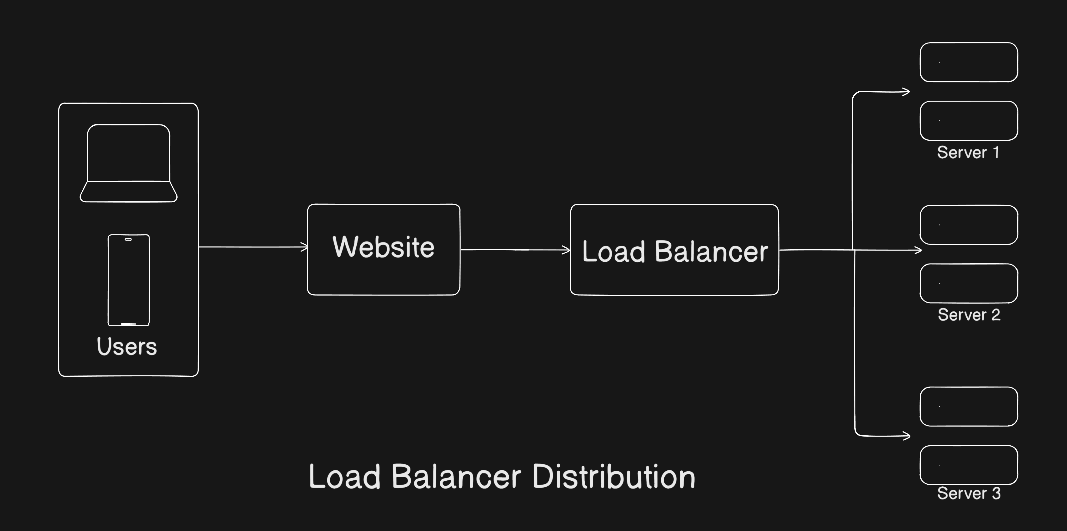
Load Balancer:
Works as a "traffic cop" routing client requests across all servers.
Highly used in cloud computing domains, data centers.
Ensures that no single server bears too many requests.
So, this is the conclusion of how the internet reaches us and how network devices helps in this process.