Why Version Control Exists: The Pendrive Problem
Introduction
In the world of development, Version Control is often described as a "time machine" for code. To understand why it is so important, you first have to understand the mess that existed before it:
“**The Pendrive Problem.”
Imagine you and a cousin are both writing a recipe for a pickle on the same piece of paper.
The Problem: You have the paper, write down your ingredients, and then pass it to your cousin. But while your cousin has the paper, you realize you forgot the lemon. You can't change it because the paper is gone.
The Disaster: Your friend crosses out your "lemon" and writes “mango" instead. When you get the paper back, your original idea is gone forever. You have no way to see what the recipe looked like five minutes ago.
Pendrive Problem is what happens when:
Only one person can "hold" the project at a time.
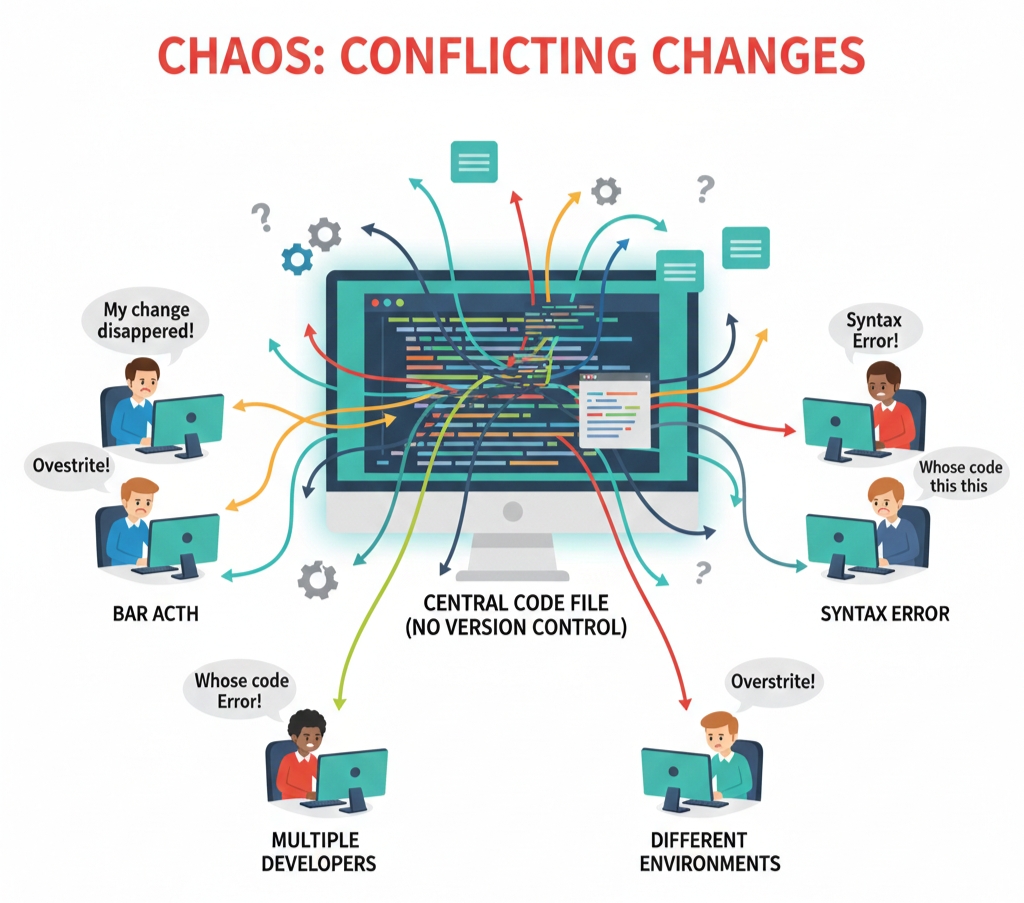
If two people work on it, the person who saves last wins, and the other person's work is deleted.
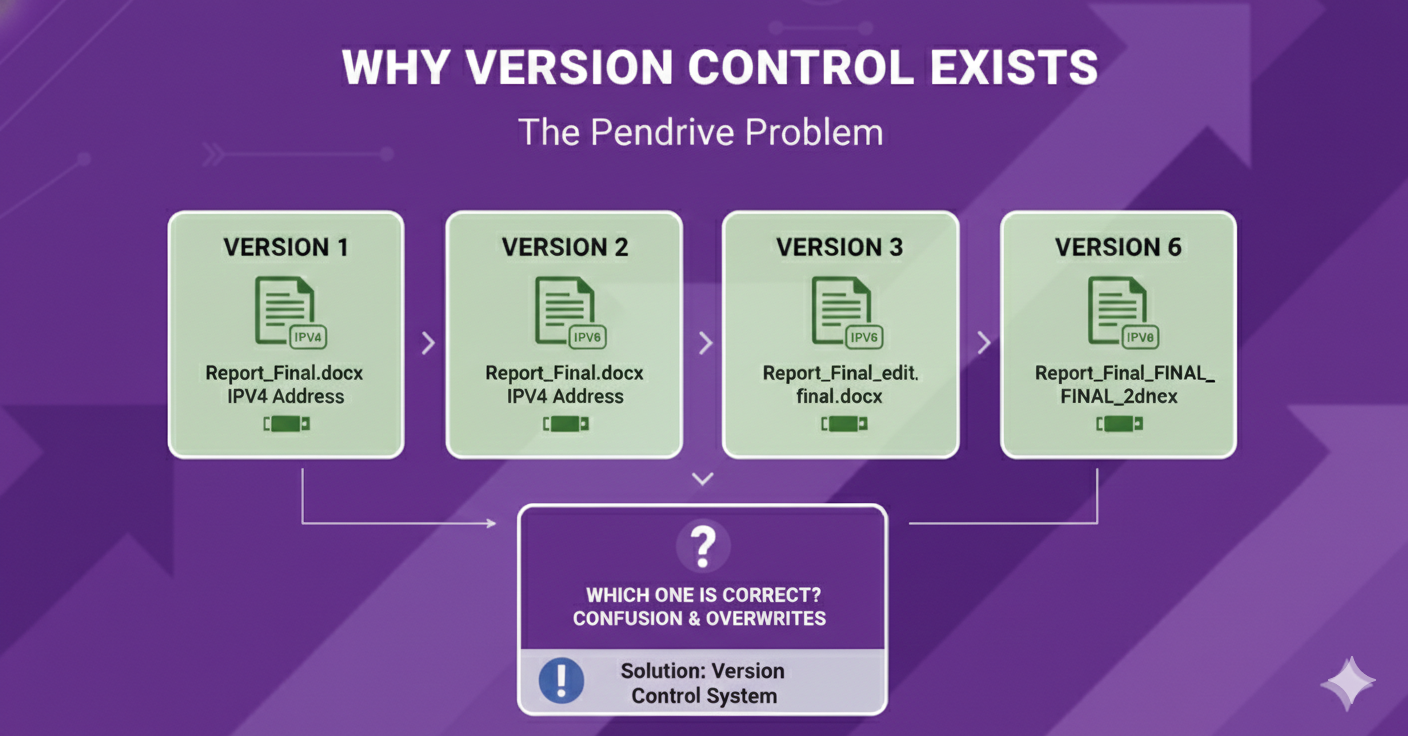
You end up with a folder full of files like
Final_1,Final_2, andFinal_ACTUALLY_FINAL, and no one knows which one actually works.Version Control is like having a "Magic Paper" that lets both of you write at the same time, keeps a history of every single word ever written, and lets you "undo" any mistake instantly.
Why Version Control Exists
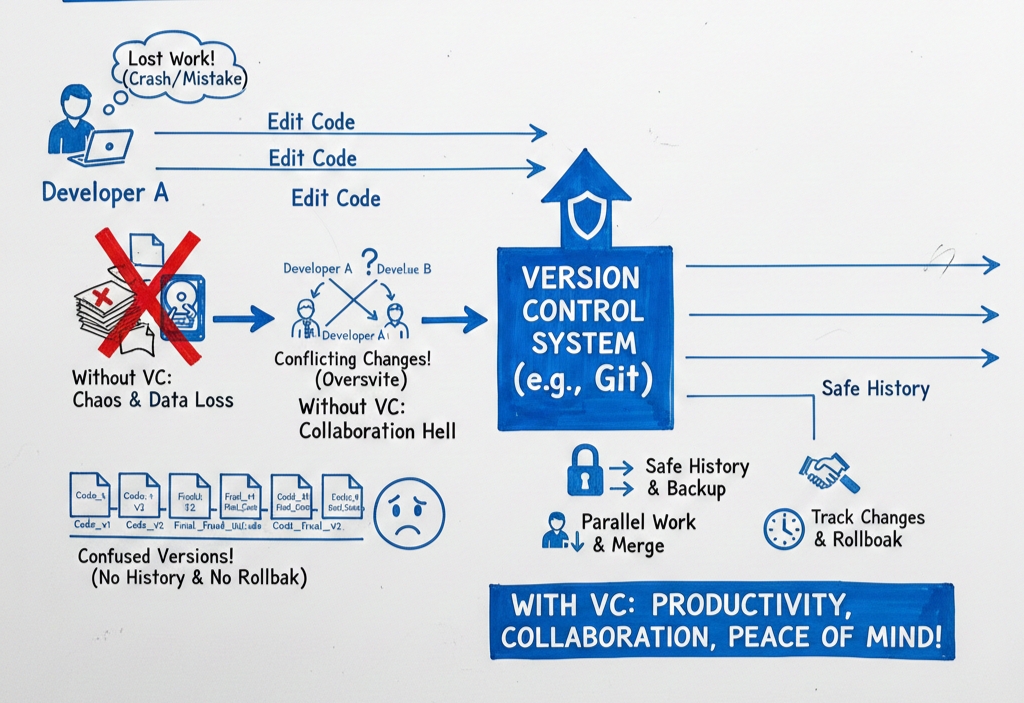
Version control exists because, without it, software development could be disastrous, and collaboration would have been chaotic in the past. Without it, Managing code is like trying to write a book with 4-5 authors using the some physical piece of paper eventually, someone is going to erase someone else’s hard work.
Before version control systems, if you or anyone made a mistake, you had to manually go into the program to find and correct errors, or if you were lucky, someone would have a backup file like final_v2_REAL_final.zip.
The Pendrive Analogy in Software Development
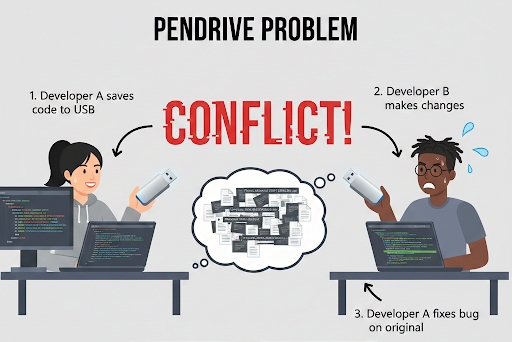
Imagine you're working on a group project with three friends: Aakash, Ram, and Mina. Without version control, you write the first version of the code and save it on a single pendrive. You then physically hand this pendrive to Ram so he can add new features to the hero section. This is where the problem starts. While Ram has the pendrive, you, Aakash, and Mina cannot work on the project simultaneously. If you all decide to code on your laptops independently, you end up with different versions of the same project, turning collaboration into chaos.
Problems Faced Before Version Control Systems
Folder Trap:
Developers heavily relied on physical hardware like pendrives, messaging apps, and emails, along with creative but messy naming conventions, which could lead to difficulties. When you complete your task, you don't want to lose the data in case any changes occur. Developers copied the entire code into their file and renamed it.
The Problem: You end up with many versions of your project file, and after a week, you have no idea which file contains the actual real code. In case a bug appears, you have to manually go through and compare those code files to see what broke.
File_Project (the one you're currently working on).
File_Project_Backup (in case you lose your data).
File_Project_FINAL (the version sent to the client).
File_Project_FINAL_v2 (The client changes).
File_Project_FINAL_v2_Fixed (based on client changes).
File_Project_FINAL_v2_FIXED_REAL_FINAL (hopefully the last one).
Email “zip” Method:
Another way developers collaborated was by emailing compressed .zip files.
The Workflow:
There are two developers working on a website like LinkedIn.
The first developer works on the “Login” feature, completes it, zips the folder, and sends an email to the second developer.
The second developer downloads it, unzips it, and starts to work on the “User Profile” feature.
While the second developer is working on the profile feature, the first developer finds a bug in the login feature, so he fixes that on his own system.
Now there are two different versions made by two developers: the second developer has a new profile but with the old login bug, and the first developer has the new login fix but no profile feature.
So the question is how they are going to collaborate. To combine those two versions, they have to open the files side-by-side to check line-by-line code to see differences and find bugs.
Pendrive-based workflow v/s version control workflow
The difference between these is like pendrives are for manual file management, and version control is for automated history tracking.
Pendrive Workflow:
Stored physically or manually.
Only one person can work at a time.
High risk of losing data.
Hard to undo mistakes.
What changes is always unknown because it’s overwritten.
Version Control Workflow:
Stored in the cloud or in a local repo.
Everyone can work at once.
Built-in backups.
Easy to undo mistakes, one-click rollback.
Merges changes safely.
Conclusion
Version control systems revolutionized software development by eliminating the chaos of manual file management and enabling seamless collaboration. They provide a reliable way to track changes, manage multiple contributors, and ensure data integrity, making them indispensable in modern development workflows.


